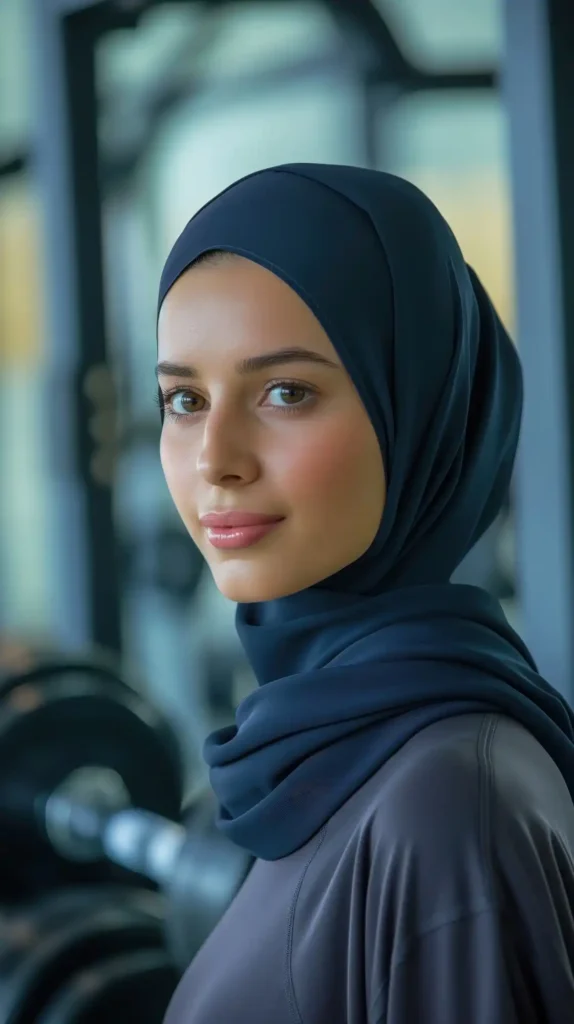
The needs of the scalp vary according to numerous factors, including hair type, climate, lifestyle and hair care practices. With the daily wearing of a hijab, heat, humidity, duration of wear and even the type of fabric may also influence scalp comfort and hair care needs. Understanding these specific factors makes it possible to develop formulations that are better suited to conditions of use and consumer expectations around the world.
Does wearing a Hijab cause hair loss?
Contrary to a widespread belief, the available scientific evidence does not support the conclusion that wearing a hijab directly causes hair loss. Hair health depends primarily on genetic, hormonal, nutritional and medical factors, as well as certain hair care practices.
For some women, wearing a hijab every day may be associated with a sensation of heat, increased scalp perspiration or excess sebum, particularly in hot weather or during physical activity. Occasional itching or a loss of freshness may also be experienced throughout the day. These effects are related to conditions of use and environmental factors rather than to the hijab itself.
This distinction is essential, as it guides the development of hair care products designed to maintain scalp balance and daily comfort rather than address an issue that is not directly associated with wearing a hijab.
How does climate influence the scalp under a hijab?
Climate is one of the main factors that can influence the needs of the scalp.
In Gulf countries such as Saudi Arabia, the United Arab Emirates, Qatar and Kuwait, high temperatures naturally promote perspiration. Exposure to solar radiation, sand-laden winds and frequent transitions between outdoor heat and heavily air-conditioned environments may also contribute to weakening the hair fibre and increasing the feeling of dryness along the lengths. Hair care products developed for these markets generally favour lightweight, moisturising and protective formulations capable of maintaining scalp comfort without weighing the hair down.
In South-East Asia, particularly in Indonesia, Malaysia and Brunei, heat and humidity are more likely to promote an oily scalp and a rapid loss of hair volume. Formulations for these markets therefore favour lightweight textures, sebum-regulating active ingredients and ingredients that provide a long-lasting sensation of freshness.
In Europe, scalp needs tend to vary more with the seasons. Changes in temperature, indoor heating, urban pollution and water hardness may influence both scalp comfort and the condition of the hair fibre. Hair care products developed for these markets seek to achieve a balance between hydration, protection, sensoriality and respect for the skin’s natural balance.
This diversity of situations highlights a well-established principle in cosmetic formulation: an effective hair care product cannot be developed using a universal approach. Environmental constraints, lifestyles and consumer expectations must be taken into account from the earliest stages of Cosmetic Formulation Research & Development in order to create formulas genuinely adapted to the specific requirements of each market.
Hairstyling practices also influence scalp health
Daily hijab wear often involves keeping the hair tied back for several hours.
When hairstyles are repeatedly worn too tightly, they may place mechanical stress on both the hair fibre and the scalp. Alternating hairstyles, opting for looser hair ties and adapting hair care practices to the hair type all help to maintain daily scalp comfort.
Scalp needs may also vary according to the nature of the hair, whether fine, thick, curly, textured, colour-treated or sensitised. This diversity highlights the importance of developing hair care products capable of meeting a wide range of needs rather than targeting a single consumer profile.
Developing hair care formulations for daily hijab wear
Consumer expectations are evolving towards hair care products that combine efficacy, sensoriality and respect for the scalp’s natural balance. To meet these new expectations, the development of innovative formulations relies on the careful selection of ingredients with complementary properties, tailored to climatic conditions, lifestyles and the specific characteristics of each market.
Humectant and moisturising ingredients help maintain scalp comfort, while soothing ingredients contribute to overall skin well-being. Sebum-regulating active ingredients help control excess sebum when required, while microbiome-focused ingredients contribute to preserving the natural balance of the skin ecosystem. Lightweight, fast-absorbing textures, together with ingredients that provide a refreshing sensation, meet the expectations of consumers looking for hair care products that remain pleasant to use throughout the day.
This evolution is driving the development of gentle shampoos suitable for frequent use, scalp serums, lightweight lotions and refreshing sprays designed to maintain scalp comfort without weighing the hair down.
A cosmetic approach tailored to international markets
Scalp needs are not universal. They evolve according to cultural practices, climate, exposure conditions and everyday use. Developing a product for women who wear a hijab is therefore not about creating a separate product category, but about understanding how these different factors influence scalp balance in order to develop formulations that are genuinely adapted.
This approach makes it possible to develop hair care products that meet the expectations of consumers in the Middle East, South-East Asia, Europe and other regions of the world, where requirements in terms of sensoriality, performance and comfort may vary significantly.
At Laboratoire Orescience, our Cosmetic Formulation Research & Development expertise is built on this understanding of consumer habits and environmental conditions to support brands in the development of private label and custom shampoos, serums, lotions and scalp care products. This expertise enables us to develop innovative hair care products tailored to the specific characteristics of each market and to consumer expectations worldwide.